

 Back to News
Designing a Connected City – Part 5: Broader Challenges
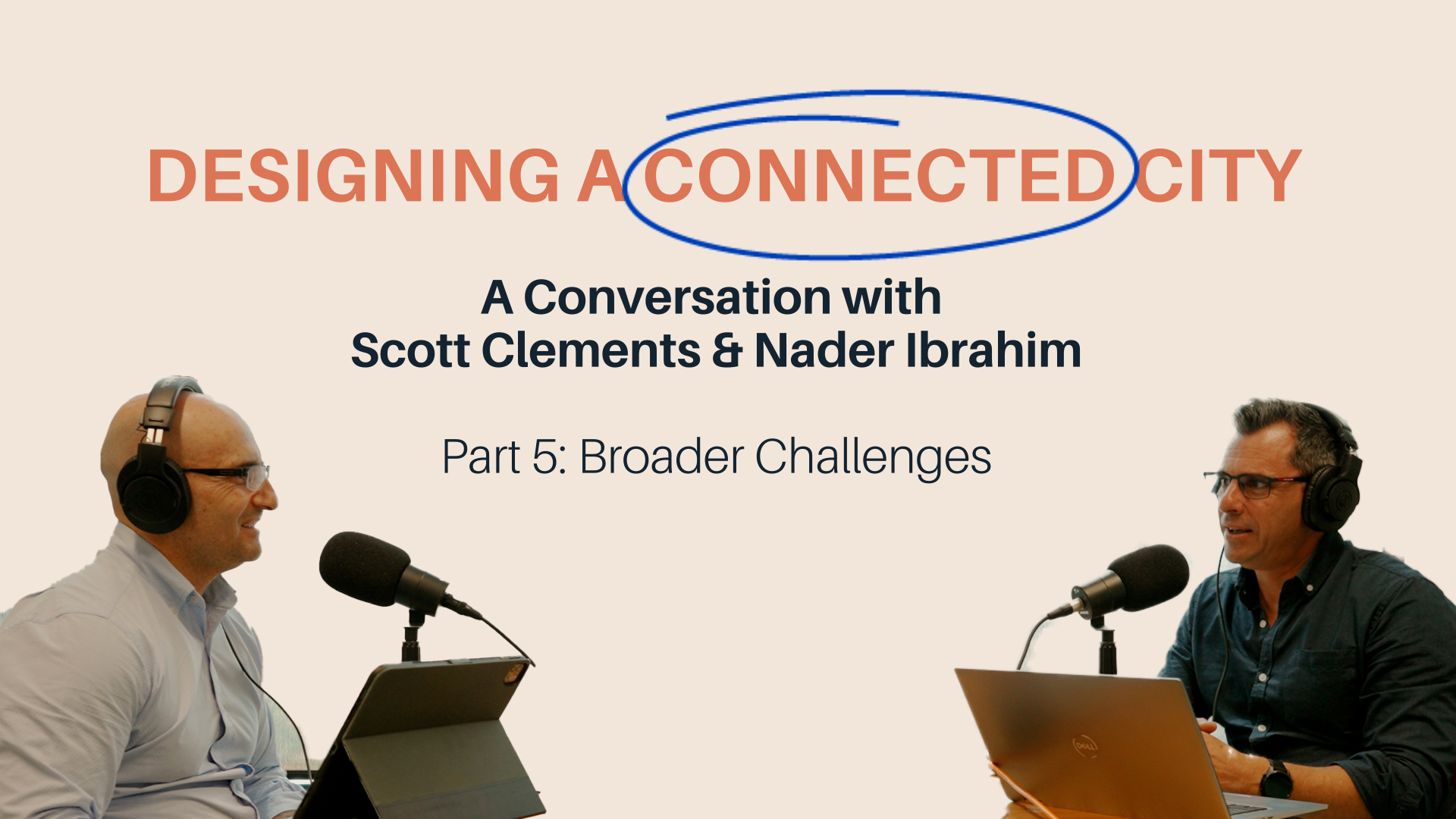
Scott Clements and Nader Ibrahim (O2LA) take a look at the broader challenges that sit behind transforming Woolloongabba. One of the biggest hurdles is cost – reconfiguring major transport infrastructure will not be cheap. But as they discussed in this video, some ideas can generate returns. A key example is the proposed hotel precinct, strategically located near the future arena and supported by Cross River Rail. If built, it can bring in early revenue that offsets the investment required to co-locate traffic along Stanley Street.
Time and governance also play a major role. Big shifts take time, and meaningful change requires both local and state governments working toward a shared vision. Instead of delivering infrastructure first and planning around it later, Scott and Nader argue that we need to flip that logic. Design the precinct holistically, and let major transport pieces such as the future Metro Station fit into that bigger picture.
They also acknowledge that construction inevitably creates short-term discomfort for local residents. But the call is clear: think beyond the inconvenience of today, and focus on the opportunities for future generations. A connected public domain, increased property value, and a revitalised everyday environment – the long-term positives outweigh the short-term challenges.
Most importantly, Woolloongabba has the potential to create a true village heart. With its nearby health precinct, residential fabric, heritage assets, and major transport spine, Scott and Nader believe the precinct has even more catalytic potential than Victoria Park. The south side of the river is missing a genuine, people-centred hub, and Woolloongabba Village can fill that gap.
Stay tuned for Part 6, where Scott and Nader walk through the design thinking and unpack how it translates into a connected precinct. To hear the full conversation, click here: https://lnkd.in/g3CqiSPV

